Why I Joined Neo4j and the OSS AI Road Ahead in 2025


With Emil Eifrem at the Spring 2024 Graph Gathering
Last year, I’ve joined Neo4j, the category-creating Graph Database company. As most developers, I am fond of graph algorithms, and knew about Neo4j for many years — almost two decades in fact! My fellow cofounder of one of the previous startups even reminded me we pitched our edtech product to Neo4j a decade ago. And I wrote about Public Knowledge Graph on this very platform in 2016. Fast forward to now: we need to load datasets into public knowledge graphs to enable GraphRAG at web scale!
So why Neo4j, and why now?
If you are doing anything in Open-Source and AI, the answer is obvious: Knowledge Graphs for GenAI and engaged developers building the future with us. The current set of best practices is called GraphRAG, that you’ve probably seen recently.
Press enter or click to view image in full size
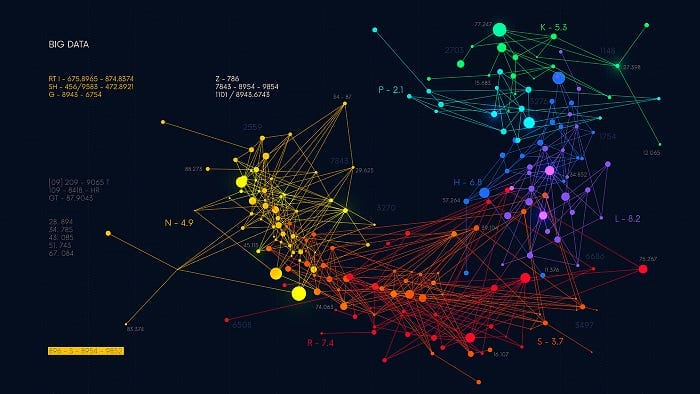
representing big data as a graph
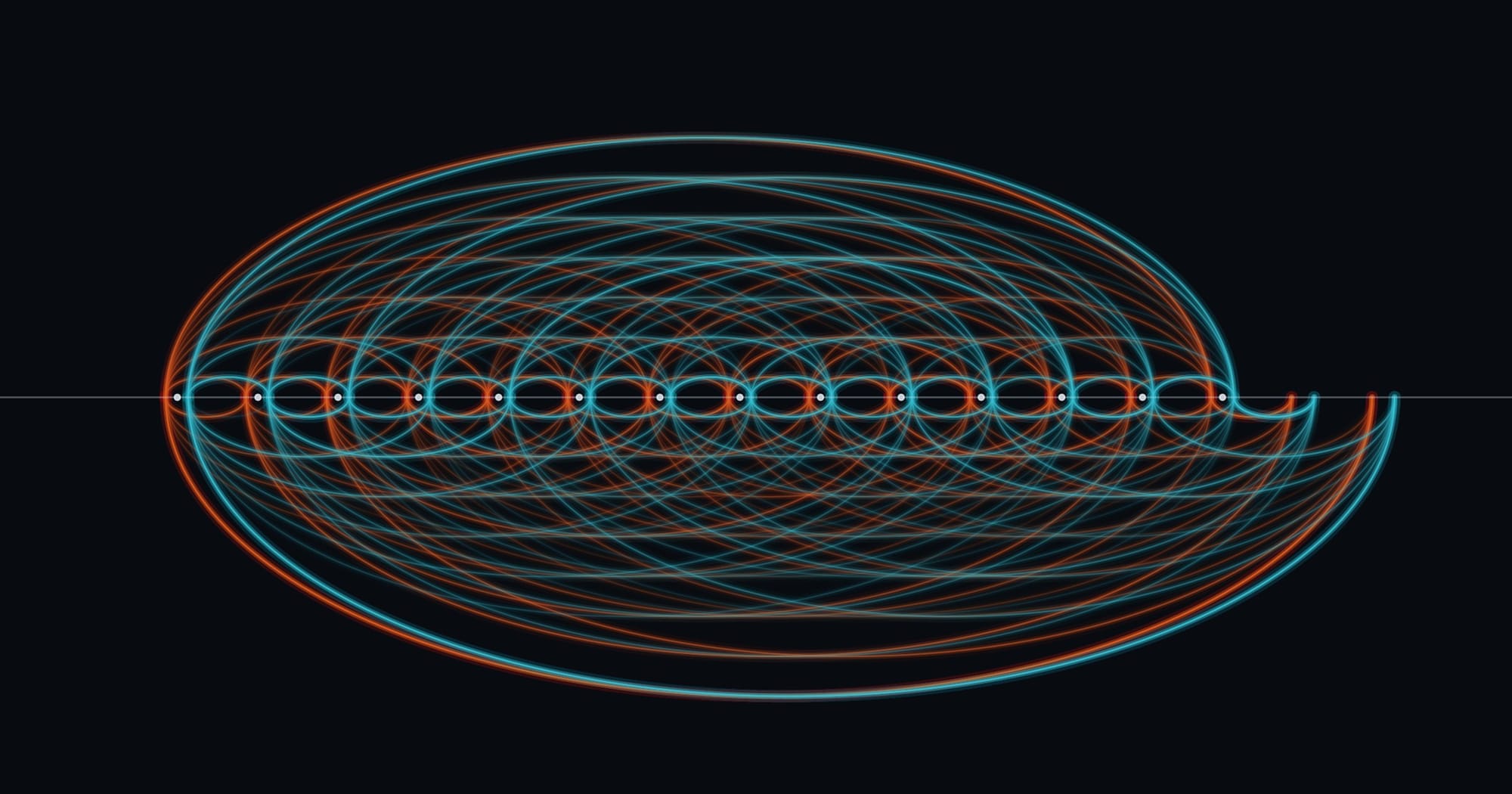
Fun facts about me and graphs: I’ve implemented the six degrees of separation problem in Fortran using OpenMP, for fun, packing binary graphs on a PC with two Xeon processors in 2001. I used IMDb, the perennial graph choice, and packed a binary adjacency matrix in Python for as input for Fortran 77, to be READ into COMMON blocks. My Computer Science PhD thesis, the Mind Economy, was the first social media influence analysis done on streaming API from Twitter. The thesis was a working system written in Scala, Clojure, OCaml and Haskell. It discovered Justin Bieber!

one day my OCaml code found this guy
But first things first. Neo4j was founded by developers as a way to shift the paradigms behind the way we think of software and domain knowledge. People think in graphs. In fact, the rise of the relational databases is the most unnatural phenomenon — normalization and joins, that tax the lives of most developers, are not how humans store or retrieve knowledge. We make connections as relationships in a graph, and we enrich our memories of people and things with attributes, as nodes. Neo4j has a deeply rooted Open-Source DNA, and all our devrel work is OSS. By being there for developers for almost two decades, we’ve earned developers’ trust and affection. Everywhere I go, Neo4j users come up to me and share their positive experiences and use cases. We are deeply ingrained in the fabric of the modern knowledge economy worldwide.
Press enter or click to view image in full size
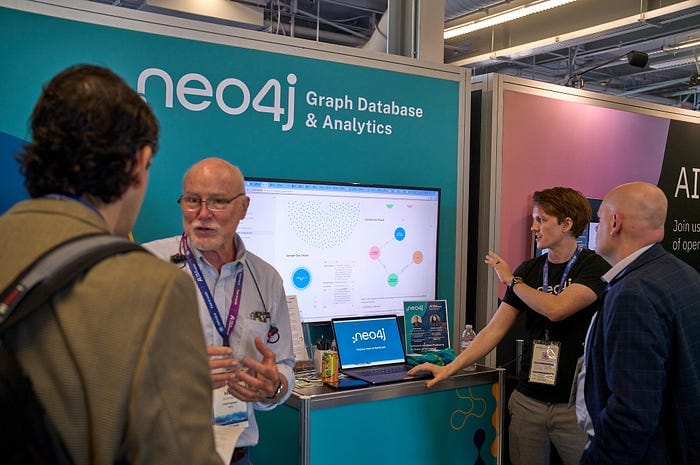
Neo4j booth at the AI Conference, San Francisco
AI is only good as the knowledge used to build it, and only as good as the knowledge it imparts as actionable advice. After two years of GenAI, it started to dawn on the enterprises running PoCs that it is hard to deploy without domain knowledge, constraints, and validation. The RAG approach arose, but a vector RAG alone is not enough. GraphRAG is a more comprehensive option, allowing for traversals and merging symbolic AI with GenAI. Everything we learned since the inception of AI is useful again including result grammars, structured output, and reasoning engines such as Prolog and Datalog. LLMs are very efficient at indexing data, but it has to be enriched in a Knowledge Graph to become validated and explainable.
From my NLP background at Penn to distributed systems and pioneering use of Spark and functional programming, and building global OSS communities there, I see an enormous opportunity of convergence around Knowledge Graphs and GraphRAG. The approach, started by Neo4j, has been validated by Microsoft, Amazon, Google, and other hyperscalers. The work of my Penn NLP teachers now at University of Edinburgh shows the way to build reasoning engines with Knowledge Graphs with LLMs. A similar approach is pursued by Eric Meijer with Universalis, an AI-native programming language similar to Datalog that treats LLMs as its runtime. I’ve seen the return of reasoning skills, rhetorics, and a return of the humanist mindset shortly after the rise of ChatGPT.
As the founder of Open-Source Science, a convener and cofounder of the AI Alliance, and a founding Chair of the Generative AI Commons at the Linux Foundation for AI and Data, I work on building OSS AI communities for more than a decade. I’ve started a decade ago with Bay.Area.AI, the longest running, biggest, technically deepest AI meetup in the world. We are now on Luma! Before that I’ve created Scala for Startups and built it into SF Scala, the biggest Scala meetup in the world. In 2012, with Matei Zaharia presenting Spark at SF Scala at Klout, we started the Bay Area Spark meetup, the very first Spark meetup in the world.
It is not easy to engage the leading GenAI startups in the oversaturated Bay Area scene where often there are five AI meetups going on on the same day at the same time. It has been a problem in enterprise settings. Startups value code and developers. In one year, Neo4j has built pairwise integration with all the leading OSS AI tools, including LangChain, LamaIndex, Milvus, and other RAGs. When MCP was released, Michael got it working with Neo4j in a few days. In the same vein, I am very excited about the OpenCTX initiative from our friends at Sourcegraph, enriching context for dev tools. When our GenAI engineering lead Oskar Hane came over from Sweden, we’ve spent a few hours with the LangChain folks planning the production version of Neo4j LangChain integration. When you build and come with code, folks find time to work with you!
I was immensely impressed by the work of the lean Neo4j devrel team, lead by the VP DevRel Steve Chin, with the CTO Philip Rathle, OG Michael Hunger, the OSS AI champion Tomaž Bratanic and others. There are amazing resources created by our team all the time — e.g. y’all should follow Jason Koo here on Medium for GenAI graph recipes you can use right away! And our founder Emil Eifrem is engaged in all aspects of the company — a developer and devrel OG himself. With Emil and Andreas Kolleger (another devrel OG, the ABK of Neo4j), Neo4j gathered leading graph folks at the Graph Gatherings in San Francisco, where we brainstormed the Graph AI road ahead. Every devrel team member is brilliant and special in their own right, building meetups, collaborations, building educational materials and criss-crossing the globe with illuminating talks. Every team at Neo4j punches well above its weight, and it applies to the whole company.
Press enter or click to view image in full size
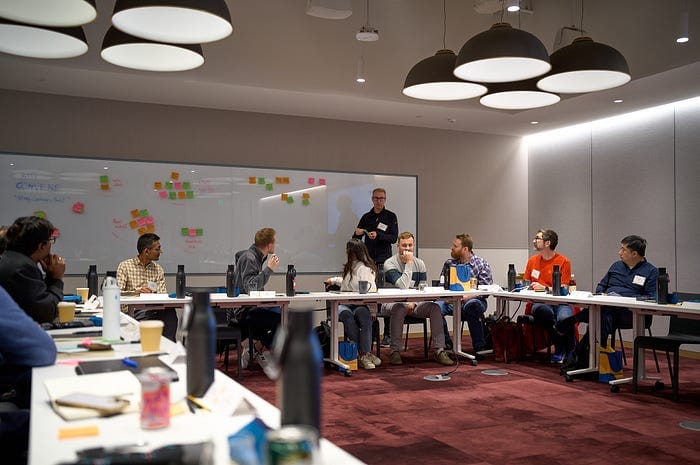
Fall 2024 Graph Gathering, San Francisco
While having a global DNA and footprint, Neo4j feels like a startup — albeit one with a powerful and effective business model, killer sales team, and the most effective marketing machine under CMO Chandra Rangan. Our devrel mission, growing the engaged developers, focuses on long lasting relationships. Over time, this is where connections matter. (Do you see a pattern?) We are able to engage with OSS communities at the same global level as at much larger corporations. At the same time, we connect with startups and developers through code, action and education, as only the most nimble companies can. Graph Academy, built by our colleagues Martin O’Hanlon and Adam Cowley, is one of the best free resources on GenAI anywhere — check it out and start building today! Also check out the deepleraning.ai Knowledge Graphs with GraphRAG course by ABK. With Aura, the cloud version of Neo4j, it is easy to teach and build anywhere.
Neo4j has a distinctive and warm culture, shaped by its origins in Malmö, Sweden, adding a cosmopolitan set of offices in London and Bay Area, and multiple folks positioned around the world, from Buenos Aires to Bangalore, each doing their work proactively and collaboratively.
Press enter or click to view image in full size
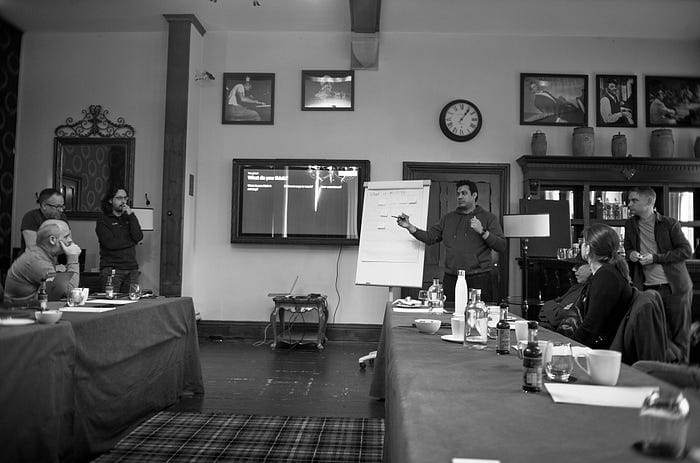
Neo4j 2024 DevRel Offsite at Stanbrook Abbey, Worcestershire
In a few months, we started to build comprehensive meetups, centered around GraphRAG, that hint at the new OSS AI Knowledge Stack. I’ll call it OAKS, and for now it is a set of best practices. OAKS naturally goes hand in hand with Knowledge Graphs, Small Specialized Models (SSMs), Domain Expert Agents (DXAs), both pioneered by Aitomatic, reasoning engines such as Universalis, and data catalogs and DNS for agents and discovery.
In 2025, we’ll work with the community bodies in OSS AI, especially LFAI, to drive a big tent coalition of OSS AI startups and enterprises working in various branches of OAKS. We build on the solid foundation of organic integrations that are already in production for Neo4j.
Press enter or click to view image in full size
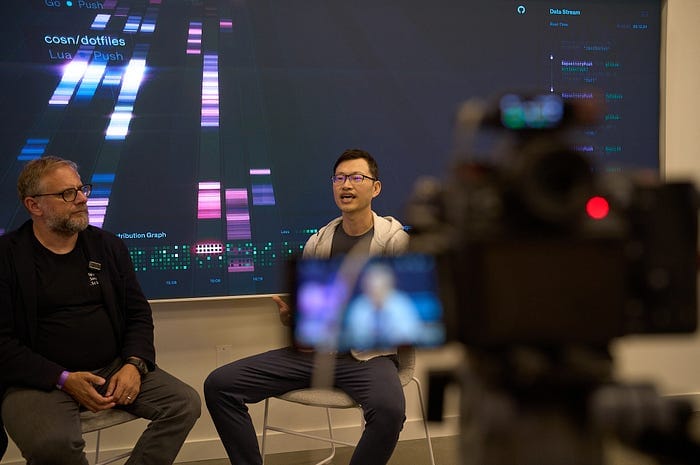
Interviewing Jiang Chen of Zilliz at Bay Area AI hosted by GitHub HQ
We start the year with two flagship events showing, not just telling, the approach. On January 16 we run an AI event at Station F in Paris with Neo4j, Koyeb, Hugging Face and Mistral. On January 23 we run a Bay Area AI meetup at AWS GenAI Loft with Neo4j, Modal Labs, .txt and Neural Magic. Both events show the arc of Full Stack OSS AI, from hardware and inference to data pipelines, knowledge use, and structured results based on grammars relying on knowledge structures. And all of it is OSS AI.
We’ve put together a collaborative blog for devrel leaders building OSS AI at devreal.ai. All our meetup videos and photos are shared there. We welcome devrel contributors — share your best practices of learning AI by teaching it! As always, best teachers stay two steps ahead of the students and build together in the open. Email me at my community address, alexy@chiefscientist.org, with your ideas, talk proposals, and anything else.
2025 is the year of Full Stack OSS AI based on Knowledge. Join us in the community, and at Neo4j, we’ll power the knowledge graphs and GraphRAG revolution that will make AI a reality.