LakeCat: a thin Iceberg REST catalog with governance, lineage, and proof built in
What if a catalog gets out of the way but keeps track of everything? With type-level security built in.


LakeCat is a Rust-native, Iceberg-compatible REST catalog foundation for QueryGraph. It speaks the standard Iceberg REST protocol — pyiceberg, Spark, and Trino talk to it unchanged — but the interesting part is what it adds underneath the standard surface, and what it deliberately refuses to reinvent.
A deliberately thin catalog with a durable spine
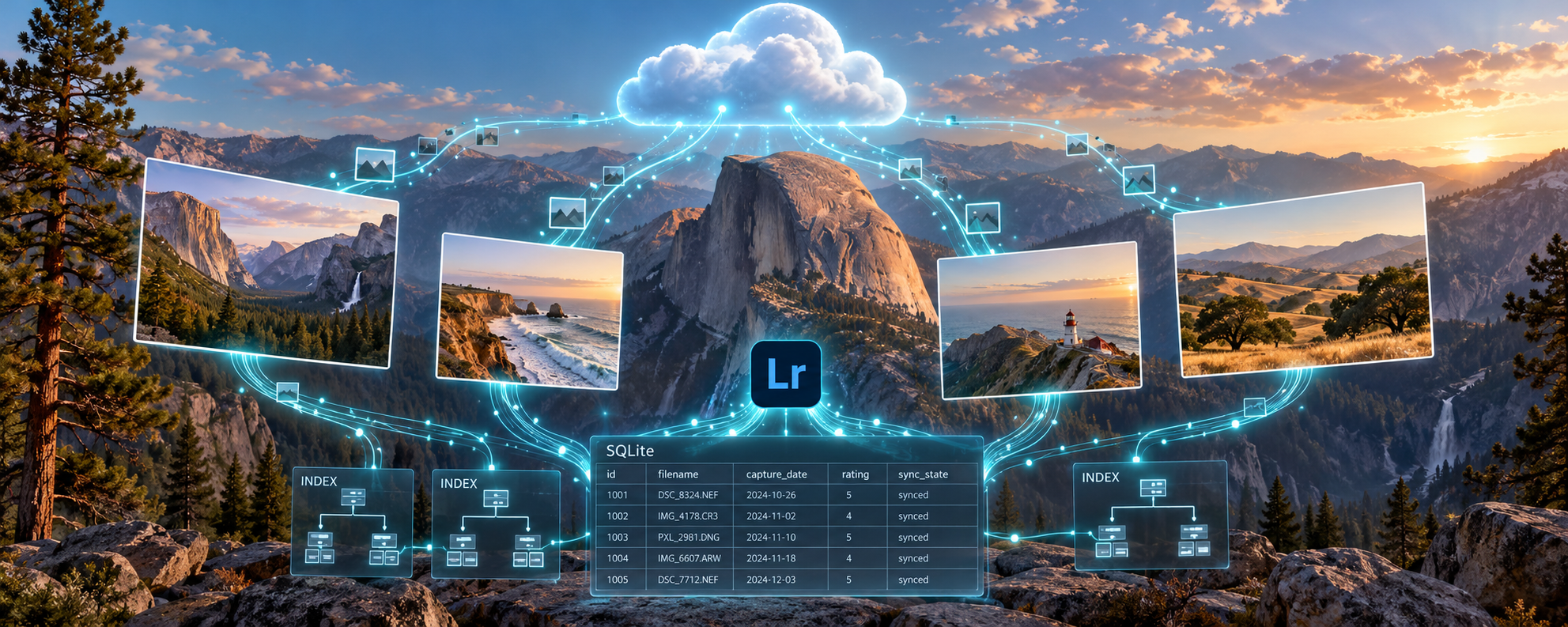
LakeCat keeps the catalog boundary thin: identity and tenancy, Iceberg REST compatibility, metadata-pointer state, policy gates, and integration events live here; everything reusable is pushed to siblings — Sail (Iceberg format/scan/pruning/engine), Grust (graph), and TypeSec (governance/policy/receipts). The catalog stays small and honest; the engines stay shared.
Underneath is a durable spine on Turso, a Rust embedded database. Every commit is one transaction that does more than move a pointer:
- a metadata-pointer compare-and-swap — optimistic concurrency, fail-closed;
- an audit event — who changed what, when;
- a transactional-outbox row — lineage and graph events staged atomically
with the commit, so a catalog change can never be lost or emitted without it;
- an idempotency record — a retried commit replays its prior result instead of
double-applying.
That is a durable audit trail, atomic lineage, and idempotency in the same transaction as the table change. Governance runs through TypeSec: governed reads narrow projection and apply mandatory filters, raw credential vending is a deliberate and audited exception, and verdicts fail closed. Lineage drains from the outbox as OpenLineage events only after the catalog transaction commits — so lineage reflects committed state, never a handler's best-effort side effect.
Turso MVCC: concurrent commits without a global lock
The spine recently moved to Turso MVCC (journal_mode = mvcc + BEGIN CONCURRENT): commits to different tables run truly concurrently, while a same-table race converges to exactly one winner through the pointer CAS and bounded retry. No global write lock, no database is locked.
The Commit Benchmark
How fast is a catalog, really? TPC-DS/TPC-H measure query engines and touch the catalog only incidentally, so we built catalog-commit-bench to measure the part they ignore — the commit transaction itself. It is an impartial harness: LakeCat, Apache Nessie, Apache Gravitino, and Apache Polaris all do the identical unit of work — validate, write a fresh metadata.json, move the pointer under CAS — to the same MinIO/S3 bucket, so you compare catalogs, not object stores. (The repo's README has the one-command Docker/MinIO setup.)
The result: after two connection-reuse fixes — cache the S3 client, pool the write connection — LakeCat's median commit dropped from ~12.6 ms to ~4.5 ms, landing second of four on both per-commit latency and concurrent throughput, ahead of Gravitino and Polaris. The small remaining gap to Nessie is exactly the audit + outbox + idempotency work LakeCat does per commit that leaner stores don't — features, not language. The full story (and why a Rust catalog has to earn its speed against warm JVM servers) is the book's The Commit Benchmark chapter.
Check it out
LakeCat is open in the QueryGraph org. TypeSec and Grust ship as published crates on crates.io; Sail is the only remaining git dependency — a coordination fork branch, until its LakeCat-needed Iceberg changes land upstream. Everything fetches automatically, so it builds out of the box — no sibling checkouts required:
git clone https://github.com/querygraph/lakecat
cd lakecat && cargo build
The design surface is in DESIGN.md and AGENTS.md; the full narrative — from the boundary model and the commit path to the benchmark — is in the book under docs/book/. It is an early foundation, built in the open. Kick the tires, run the benchmark, and tell us what's missing.