The Adversarial Cognition Trilogy: one boundary, attacked at three layers


What began as a single benchmark for an AI's memory is now three, and the reason is worth stating plainly, because we did not set out to build a suite. We set out to attack one boundary — the governed boundary that decides who may reveal or change this, and whether you can prove what happened — and every time we looked one layer down the stack, the same boundary was waiting, wearing different clothes. The memory that anchors an agent. The catalog that anchors a data lake. The authority that anchors both. Three domains; one question; and, it turns out, one adversary who is equally at home in all of them.
So the collection is now a trilogy — MARCIANA-ADVERSARIAL for cognition, CATALOG-PROVENANCE and its companion catalog-bench for the catalog, and CAPABILITY-ADVERSARIAL for authority — with a book expanded to hold all three, a home at adversari.al, and a second version of the original already taking shape from the sharpest objection we have received. This post is the tour.
One idea, stated once
Every part of this rests on a single, slightly heretical idea: that the safest way to keep a rule is not to check it while the program runs — a check can be forgotten, skipped, or duplicated until the copies disagree — but to write the rule into the program's grammar, so that a program which breaks it does not fail at run time but fails to compile. In the QueryGraph stack this is TypeSec: authority is not a flag but an unforgeable typed value, a Capability<P, R> with no public constructor, mintable only through a policy decision — so the mere existence of one is proof the policy approved it. Identity is TypeDID: a request is signed, not accompanied by a copyable password, and — the invariant the whole stack is organized around — verified identity is not authority. Proving who you are grants nothing until a policy turns that identity into a narrow, expiring, typed capability.
From that one idea the benchmarks inherit their spine. Every system is scored only on the capabilities it declares — never faked, never punished for an honest "unsupported." Safety failures land in named hard gates that must be zero and are never averaged into a quality score. And the corpus is pinned by content digest, so changing an expectation is a visible, reviewable act, not a quiet edit. Three benchmarks, one constitution.
Cognition: the origin — and a version two already forming
MARCIANA-ADVERSARIAL began as Marciana's release gate: a deterministic, adversarial benchmark for governed AI memory that asks not "did it remember the right thing?" but "does the boundary hold when the memory and the request path are actively trying to break it?" Eighteen cases, nine gates, a field of widely used open-source memory systems each driven through its own adapter against local models. What it finds are failures no recall score can see: a private record that leaks to a lower-clearance user in the same tenant; a ranking that changes when you reorder the words of a query; input that isn't bounded until an adversary, rather than a user, is typing. The live numbers live on adversari.al/cognition and in the benchmark's companion report — the book keeps to the character of the findings, which does not change with the day's scores.
The interesting news is v2, and it comes from being contested. A careful reviewer pointed out that placing a system driven through a full agent loop (model reasoning, tool calls, a response parser) in one table with adapters that call a storage API directly mixes abstraction layers — and even documented, one table invites an ordinal read of unlike measurements. That is correct. MARCIANA-ADVERSARIAL-v2 answers it with three changes: two explicit tracks (a memory-store track and an agent-memory track) compared only within a track; a controlled agent-memory harness where every backend runs under the same model, loop, prompts, tool contract, and context budget so only the memory varies; and authorization exercised through distinct authenticated identities, never adapter-selected partitions — the same failure mode a previous review had caught, where an adapter that routes each principal to its own store manufactures an isolation the system does not enforce. The first piece has already shipped: every adapter now declares an interface (direct-api or agent-loop), and the Letta adapter can run both ways, so the cost of the agent loop becomes the delta between two rows of the same product rather than an argument.
Underneath the version bump is a principle the expanded book now argues in a chapter of its own — A claim is a boundary. You cannot escape a test of your claims by renaming the category. A system that "reasons about time rather than remembering" has not stepped out of the ring; it has named the punch it is most inviting, because temporal reasoning is exactly one of the boundaries the corpus attacks. Whether cognition is wrapped in an agent or exposed as a library, the claims are the same, and each can be attacked in its own domain and measured. The label on the box is marketing; the claim is the contract; and the contract is what gets tested.
Catalog: provable transactions, and what they cost
Descend from the agent's memory to the catalog beneath a data lake and the same questions are waiting. CATALOG-PROVENANCE asks not which Iceberg catalog commits fastest — a fair question with its own answer — but the one you cannot see until something goes wrong: when a catalog accepts a transaction, can you prove what happened, offline, months later, without trusting the server that says so? The benchmark builds that question from first principles — a table is files in a bucket; a version of it is a snapshot; a catalog is the single pointer to the current one; a commit moves the pointer — and then attacks the commit with a stale writer, a duplicate retry, a tampered receipt, a scan replayed under the wrong policy.
The shape of the result is the finding. Three real, competent, widely deployed stock catalogs each hold exactly two capabilities — commit and compare-and-swap — cleanly and honestly, and decline all eleven governance capabilities, because a stock catalog has no such surface to claim. No idempotent replay, no durable audit, no atomic outbox, no receipt an auditor could verify offline. Every Iceberg catalog gives you compare-and-swap; only a governed catalog gives you a transaction you can prove. LakeCat's governed boundary holds them all.
And because provenance is a cost paid on every commit, it deserves an honest price, which is what the companion catalog-bench measures: the same catalogs, one shared MinIO, identical commits, latency then throughput under contention. The durable finding is a ranking with a moral — a lean version store leads on raw sequential latency, LakeCat sits a couple of milliseconds behind it (the price of seven durable writes inside every commit), and under contention, where governance is supposed to hurt most, LakeCat is fastest. LakeCat is paying for features, not losing on speed. The two benchmarks are one argument stated twice: the performance suite measures the cost of the governed commit; the provenance suite measures what the cost buys. Stated as a price, the difference between a logbook and a ledger is milliseconds.
Capability: authority as an object
Descend once more, to authority itself. CAPABILITY-ADVERSARIAL asks whether the authority a system grants is one an attacker — or the model itself — cannot forge, widen on delegation, replay past revocation, or aim at the wrong resource. It runs ten authorization systems, live, each over its real library, and the roster is a ladder: a bearer-token floor (JWT/OAuth); a capability-token band (Macaroons, Biscuit, UCAN) that makes authority portable and shrinkable; a decision band (Cedar, OPA, and the relationship engines SpiceDB and OpenFGA) that makes it governed but evaporating; and TypeSec at the top.
The bands cluster so cleanly the table reads like a geological cross-section, and the moral has an aphorism: policy engines decide, capability tokens travel, and bearer scopes gate — and only a capability system makes the authority itself unforgeable, attenuation-monotone, instance-bound, revocable, and label-aware, all at once. TypeSec is that intersection, one honest case short of an idealized reference — and the case it declines, wire-integrity, it declines truthfully, because no real system in the field claims it either. That visible, truthful mark on the author's own system is exactly what should make the rest of the row believable.
Why the three are one
Read the trilogy together and the same few figures stand in every part, wearing the local costume. One adversary — forge, replay, stale-overwrite — equally at home in a memory, a pointer swap, and a delegation chain. One receipt — sealed by its own digest, verifiable by a stranger, deterministic so identical runs agree. One atom — the domain-separated digest beneath every receipt. One guarded door — authority with a single home and no convenience API around it. One refrain, the deepest — proof is not authority — from a verified identity that grants nothing, to a scan proof that does not vouch for stapled text, to the phantom Authorization: Bearer None a governed catalog rightly rejected. And one direction: authority only ever narrows.
These are not three boundaries that happen to resemble one another. They are one boundary, built once in the foundations and composed into each domain — Marciana is literally TypeSec's memory crate; LakeCat's governed-scan proof flows upward into Marciana's commits — so proving the boundary in one place strengthens a foundation the others rest on. A composable stack deserves a composable proof, and now it has one.
The book, expanded; the site, alive
If the benchmarks are the evidence, the book is the argument in full. Adversarial Cognition has grown from a single-benchmark release note into the trilogy's companion: a sweeping, from-first-principles Introduction on type-level security and TypeDID; a part each for cognition, catalog, and capability, every one self-contained; the A claim is a boundary chapter; and a glossary and index that hold the whole vocabulary. It is written to be durable — it describes the systems and the why, never the shifting numbers, which live in a companion results report — so it does not go stale between runs. Read it in the FirstPair reader, or take the PDF and EPUB from adversari.al.
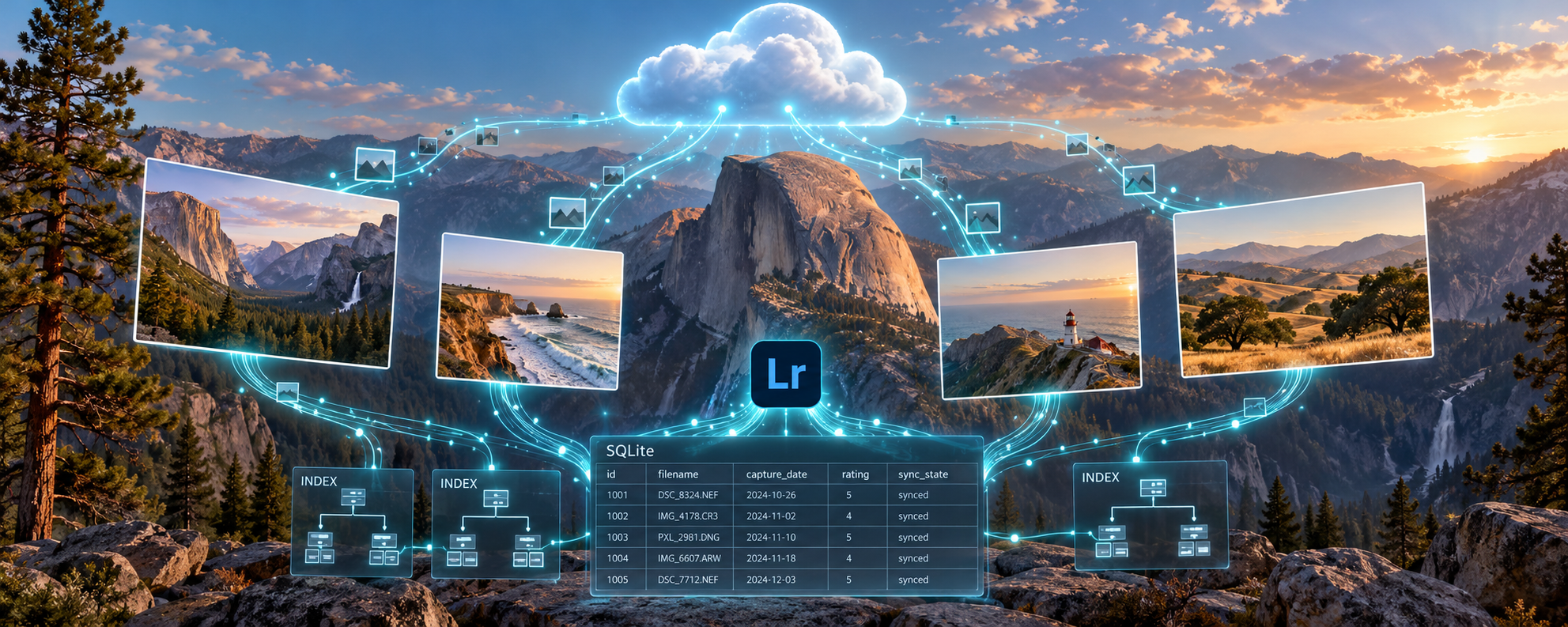
And the collection has a living face. adversari.al now carries all three benchmarks — cognition, catalog, capability — and opens with a picture of the whole thesis in motion: data percolating upward through the governed boundaries into an append-only ledger, while what is forged, stale, or replayed flares red at the membrane and is turned away, never recorded.
Get involved, and run it yourself
This is a young collection, and we would far rather it be contested than ignored — v2 exists because someone contested it well. The most useful contribution is a vendor-authored adapter for a system not yet in the comparison; the contract is small, and your adapter declares exactly what your system enforces — we will never fake a capability on your behalf, and we would genuinely like to publish your numbers next to ours. Sharper fairness objections are welcome as issues; the v2 tracking issue is open now.
git clone https://github.com/querygraph/adversarial-cognition
cd adversarial-cognition
python3 -m unittest discover -s tests -p 'test_*.py' -q   # the reference is the CI gate
docker compose run --rm benchmark                          # the full comparison → out/RESULTS.md
Cognition may be as ambitious as you like. In the enterprise, the evidence must be conservative: a model may propose anything; only a capability-bound commit may write; and every write leaves a receipt a stranger can verify. That is not a constraint on what these systems can do. It is the precondition — buildable, composable, and provable — for trusting them with anything that matters.
published with omnighost · SHA-256 2ed996fdcc8f8c4a508e6caae15ccdc2f1a3cf74ae4bd0087fe9b58f7197bf1d